
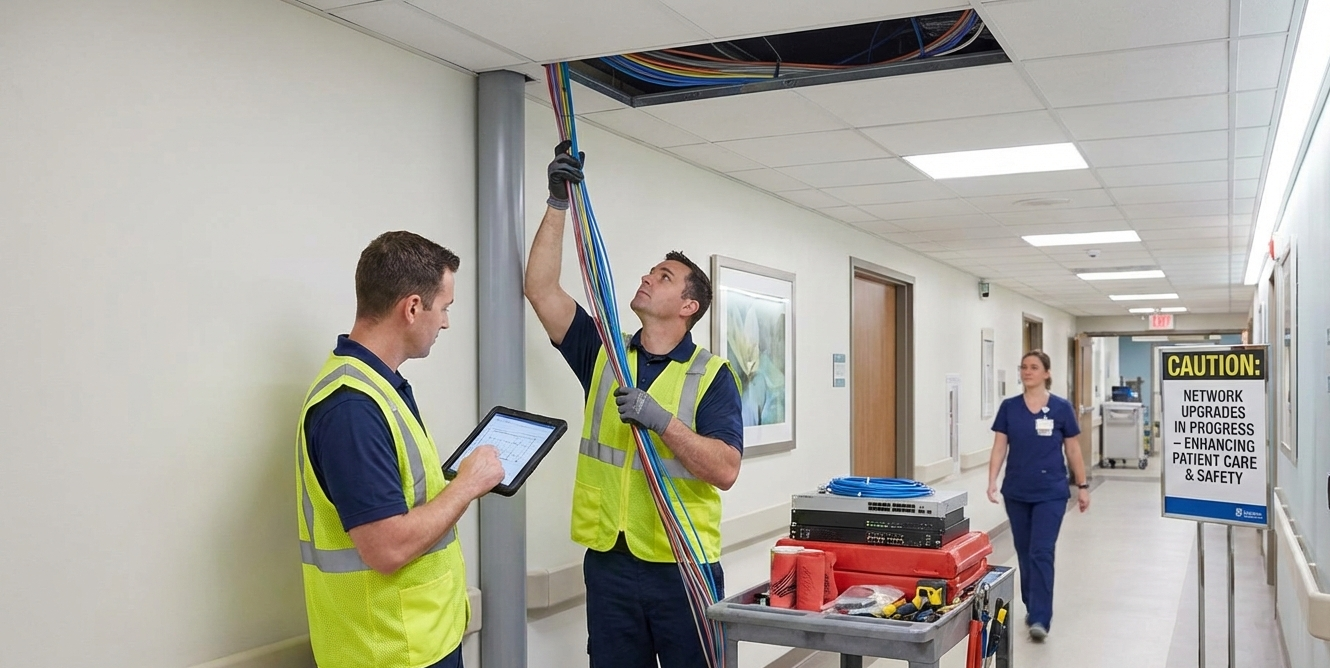
Hospitals are high-stakes environments where safety, reliability, and efficiency matter the most. Behind the scenes, one of the most critical systems supporting hospital operations is low-voltage wiring. It powers communication networks, monitors patients’ health, and keeps the facility running smoothly. Upgrading these systems is a strategic move that improves both safety and efficiency in healthcare settings.
Why Low-Voltage Wiring Matters in Hospitals
Low-voltage wiring refers to electrical systems that operate at voltages below standard building power, typically under 50 volts. In hospitals, these systems include security alarms, telephone lines, data networks, nurse call systems, fire alarms, intercoms, medical equipment connections, and critical communication functions that operate without interruption. Any minor issue with these systems can compromise patient safety or disrupt hospital operations.
Safety Benefits of Upgrading Wiring
One of the key reasons hospitals invest in low-voltage wiring upgrades is to improve safety. Older wiring degrades over time, causing equipment malfunctions or fire hazards. Low-voltage wiring reduces such risks by using high-quality materials designed to resist wear, moisture, and interference.
Upgrading wiring also improves electrical isolation, reducing the risk of short circuits or accidental shocks to staff and patients. For hospitals, where medical equipment often operates continuously and in sensitive environments, these improvements are necessary.
Additionally, new systems are better equipped to integrate with emergency backup power, ensuring critical systems remain operational during a power outage.
Efficiency Gains Through Modern Systems
Beyond safety, upgrading low-voltage wiring also improves efficiency. Modern wiring supports higher data speeds and greater bandwidth, which is vital as hospitals depend heavily on digital records, telemedicine, and real-time monitoring.
Fast, reliable connections reduce delays in accessing patients’ information, coordinating care, or communicating with teams across departments.
Upgrades also simplify system management. Well-organized cabling and structured network layouts help hospital IT staff to identify and fix issues quickly, reducing downtime and maintenance costs. This efficiency ensures smooth hospital operations, better patient experience, and more cost savings over time.
Supporting Advanced Medical Technology
Nowadays, hospitals are adopting more advanced technologies than ever before. From smart patient monitoring to automatic diagnostic tools, everything is upgrading. These devices require consistent, high-quality connections to perform optimally.
Upgraded low-voltage wiring enables hospitals to support current medical technology and adapt to future advancements without upgrading entire systems.
Planning an Upgrade
A successful wiring upgrade begins with assessment. Therefore, it’s essential for hospitals to properly evaluate their current systems, identify bottlenecks, and prioritize critical areas such as intensive care units, operating rooms, and emergency departments.
Partnering with low-voltage wiring contractors is equally essential to ensure that the installations meet strict healthcare standards and local regulations. Proper planning also reduces interference to patient care during the upgrade process.
Bottom Line
In hospitals, every small detail matters, and low-voltage wiring is no exception. From improving safety to preventing equipment failure and enhancing operational efficiency, upgrading these systems is extremely helpful.
It supports cutting-edge technology, ensures reliable communication, and is considered a significant investment in both patient care and hospital performance. Prioritizing these upgrades helps hospitals operate with confidence, knowing their infrastructure is safe, efficient, and future-ready.