In 2026, technology is no longer optional for businesses; it is the backbone of daily operations. From cloud-based systems and smart security to AI-powered tools and video meetings, everything depends on strong and reliable network wiring.
That’s why the value of future-ready wiring has become more important than ever. It is not just about connecting devices today, but about preparing buildings for tomorrow’s technology needs.
Future wiring means installing a network infrastructure that can handle growth, speed upgrades, and new systems without major changes later. In simple words, it is wiring designed not only for current needs but also for the future.
Why Businesses in 2026 Need Future Wiring
Commercial spaces are changing fast. Offices are smarter, warehouses are automated, and retail stores use digital payment systems and customer tracking tools. All these systems require stable internet and data connections.
If wiring is outdated, businesses may face:
- Slow network speeds
- Connection drops
- Difficulty adding new devices
- Expensive rewiring projects
Future-focused wiring avoids these problems by supporting higher bandwidth and faster speeds from the start.
Supporting High-Speed Networks
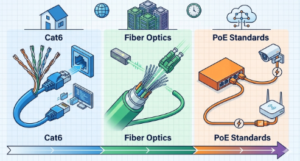
In 2026, many businesses use high-speed internet connections such as multi-gigabit networks. Video conferencing, cloud storage, security cameras, and IoT devices all demand more bandwidth than ever before.
Future-ready wiring supports:
- Faster data transfer
- Stable video meetings
- Smooth cloud access
- Reliable smart building systems
Without proper wiring, even the best routers and switches cannot deliver full performance.
Easy Upgrades Without Major Disruption
Technology changes quickly. New standards for networking, Wi-Fi, and security systems are introduced every few years. If wiring is not planned properly, upgrading becomes expensive and disruptive.
Future wiring allows businesses to:
- Upgrade equipment without replacing cables
- Expand departments easily
- Add more connected devices
- Reduce downtime during improvements
This flexibility saves both time and money.
Supporting Smart and Connected Buildings
Modern commercial buildings now use smart systems for lighting, air conditioning, security, and energy management. These systems communicate through network cables.
Future-ready wiring ensures:
- Reliable communication between devices
- Better automation performance
- Improved energy efficiency
- Long-term system stability
Without strong wiring, smart building systems may fail or perform poorly.
Cost Savings Over Time
Installing advanced wiring may seem more expensive than basic cabling. However, in the long run, it reduces:
- Repair costs
- Reinstallation expenses
- Downtime losses
- Maintenance complexity
Replacing wiring after a few years is much more costly than installing high-quality infrastructure from the beginning. Future wiring is an investment, not just an expense.
Better Organization and Maintenance
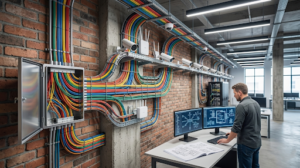
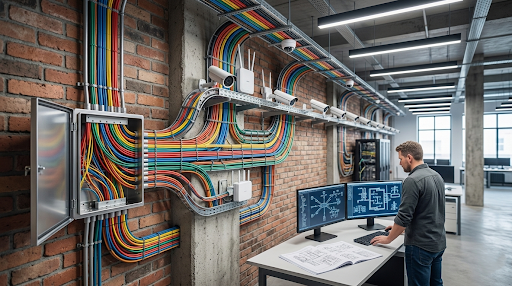
Structured, future-ready wiring systems are carefully organized and clearly labelled, making daily management much easier. When cables are properly arranged, IT teams can quickly trace connections and identify where a problem originates. This reduces confusion and avoids unnecessary disruption to the entire network.
Instead of spending hours searching through messy wiring, technicians can detect issues faster and fix them efficiently. Clean cable management also lowers the risk of signal interference and accidental damage.
Over time, well-installed wiring systems tend to last longer because they are protected, organized, and properly maintained. Proper wiring plays a major role in keeping business operations stable and running without unexpected interruptions.
Preparing for Emerging Technologies
In 2026, businesses are rapidly adopting advanced technologies, including artificial intelligence tools, cloud-based platforms, Internet of Things devices, smart surveillance systems, and access control solutions. All these systems depend on strong, reliable, and high-speed network connections.
Without a stable wiring infrastructure, these technologies cannot perform at their best. Future-ready wiring ensures that when companies introduce new digital tools or upgrade existing systems, the network can handle the additional load.
Instead of replacing cables every few years, businesses can smoothly integrate modern solutions into their existing infrastructure. This readiness supports innovation and keeps companies competitive in a fast-changing digital environment.
Final Thoughts
The real value of future wiring lies in preparation, performance, and long-term protection. It prepares commercial buildings for upcoming technologies, ensures strong, consistent network performance, and protects businesses from costly rewiring projects in the future.
In 2026, companies that invest in future-ready wiring enjoy fewer technical issues, smoother day-to-day operations, and easier expansion when they grow. Although wiring is not visible to customers or visitors, it is the hidden backbone that supports every digital system inside a building. Planning for advanced wiring today creates a stable, efficient, and reliable foundation for tomorrow’s business success.