
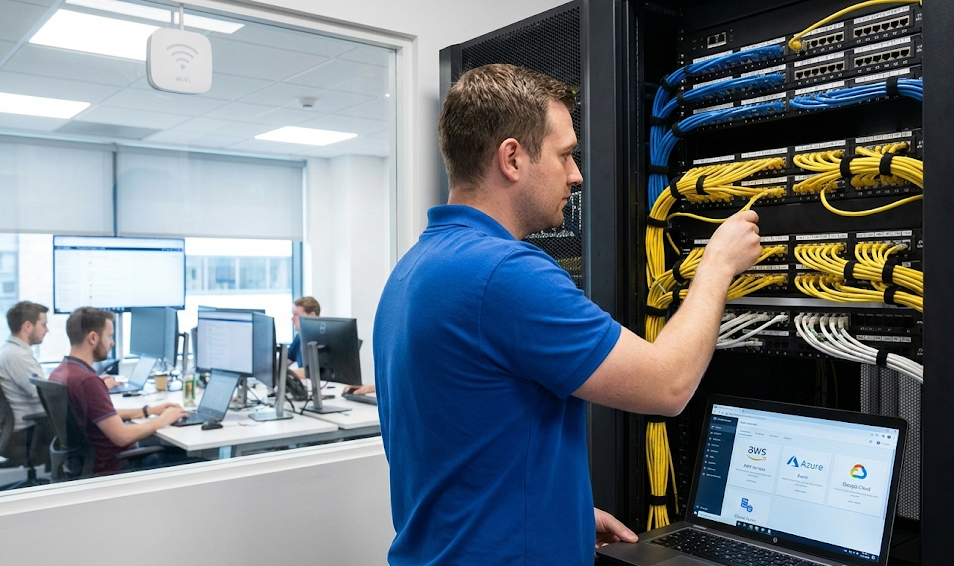
Cloud-based systems have become an essential part of modern offices. From cloud software to remote access, online file storage and video meetings, businesses depend entirely on stable internet connections for their progression. One key factor that directly supports smooth cloud usage is structured cabling.
Many offices mostly overlook it, but the proper cabling setup can significantly influence the cloud performance, speed and reliability.
What Is Structured Cabling?
Structured cabling is an organized network of cables and hardware that supports data, voice and video communication. Instead of using outdated or random wires, structured cabling follows a planned layout with clearly labelled connections. It mainly includes patch panels, switches, Ethernet cables and wall outlets designed to work together as one system.
This organized approach helps offices manage their network more efficiently and avoid common connectivity issues.
Faster and More Reliable Cloud Access
Cloud applications require fast and steady data transfer. Poor cabling may lead to delayed downloads, slow uploads and frequent disconnections. Structured cabling uses high-quality cables, such as Cat6 or fibre, to ensure faster speeds and handle large data loads easily.
Besides, employees can easily access cloud files or make smoother video calls during online meetings with fewer interruptions. This improves productivity, better workflow and reduces frustration caused by network delays.
Reduced Network Downtime
Unorganized cabling leads to troubleshooting difficulties, signal interference and loose connections. Structured cabling decreases all these issues by keeping everything well-organized, neat and professionally installed.
Moreover, clean and well-labelled cabling makes it simpler for the IT team to identify and fix issues. This means less downtime and more consistent access to cloud platforms, which is especially important for offices that depend entirely on real-time data and online tools.
Better Support for Growing Cloud Needs
When offices expand, their cloud usage also increases. More employees, devices and cloud applications put excess pressure on the network. Structured cabling is designed to scale easily, allowing new connections without significant changes to the existing system.
This flexibility helps businesses to add new cloud services, workstations, or departments without affecting network performance. It also prepares offices for future technologies and higher bandwidth demands.

Improved Security and Data Stability
Cloud connectivity involves transferring sensitive data over the network. Poor cabling increases the risk of data loss or signal leakage. Structured cabling ensures stable connections that reduce errors during data transmission.
A well-designed cabling system also makes it easier to apply security measures, such as network monitoring and access control, helping protect cloud-based information from unauthorized access.
Lower Maintenance and Long-Term Costs
Structured cabling is quite expensive as it requires proper planning. However, it saves money over time. Fewer connection issues require fewer repair costs and less need for emergency fixes. The system lasts longer and performs better than messy or outdated wires.
Employees can focus more on their work and assigned tasks without worrying about technical disruptions.
Bottom Line
Structured cabling plays a pivotal role in improving cloud connectivity for offices. From fast speed to reliable connectivity, better security and easy scalability, it creates a productive workplace for everyone.
For businesses that depend on cloud systems every day, investing in structured cabling is a smart step toward smoother operations and long-term success.