Gone are the days when offices and commercial buildings used traditional keys and locks to control who could enter certain areas. Employees were given metal keys, and managers had master keys to open multiple rooms. Surely, this method has been used for decades; it has also raised some serious security concerns, including lost keys and limited control.
Nowadays, businesses are more concerned about security and are switching to smart access control systems. These modern systems use digital technology to manage building access more efficiently and securely.
Instead of relying on physical keys, companies can now control entry through cards, mobile phones, PIN codes, or biometric verification. As workplaces continue to adopt smarter technologies in 2026, smart access control is quickly replacing traditional office keys for all good reasons.
The Problems With Traditional Office Keys
Traditional keys may seem simple, but they come with many limitations. One of the biggest issues is key management. When employees lose their keys, businesses often need to replace locks or create new keys. This can take time and increase costs.
Another problem is limited control over access. Once someone has a key, they can usually enter the area at any time. There is no easy way to track when the key is used or who is inside the building.
Security risks can also increase with traditional locks. If a key is copied without permission, unauthorized individuals may gain access to sensitive areas such as offices, storage rooms, or server rooms. Because of these concerns, many organizations are now exploring smarter security solutions.
What Is a Smart Access Control System?
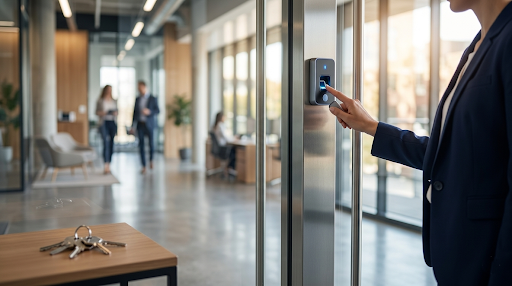
A smart access control system is a security system that allows businesses to manage entry to buildings or rooms using digital technology. Instead of physical keys (master or duplicate), employees receive secure credentials that allow them to unlock doors electronically.
These credentials can include access cards or key fobs, mobile phone apps, PIN codes, passwords, and biometric data, such as fingerprints or facial recognition.
When someone approaches a secured door, the system checks their credentials. If they are authorized, the door unlocks automatically. This process makes access management faster, safer, and easier to control.
Better Security for Modern Workplaces
One of the main reasons businesses are adopting smart access control systems is improved security. These systems allow companies to control exactly who can enter specific areas of the building.
For example, an employee may be allowed to enter the main office but not the server room or storage area. Access permissions can be customized for different roles, departments, or schedules.
Another advantage is activity tracking. Smart systems record when doors are opened and who accessed them. This creates a digital log that helps managers monitor building activity and investigate security issues if needed.
If an employee leaves the company, their access can be removed instantly through the system. There is no need to collect keys or replace locks.
More Convenience for Employees and Managers
Smart access control systems also improve convenience in the workplace. Employees no longer need to carry multiple keys or worry about losing them. Many modern systems allow workers to unlock doors using their smartphones.
Managers also benefit from easier control. Instead of manually distributing keys, administrators can grant or remove access through a computer or cloud-based platform. For large companies with multiple offices or floors, this centralized control can save time and reduce operational complexity.
Integration With Other Security Systems
Another reason smart access control systems are becoming popular is their ability to integrate with other security technologies. Many systems can work together with surveillance cameras, alarm systems, and visitor management tools.
For example, when someone enters a restricted area, the security system can automatically record video footage from nearby cameras. This provides additional monitoring and protection. Some businesses also connect access control with building automation systems to manage lighting, elevators, and energy usage more efficiently.
The Future of Office Security
As businesses continue adopting digital technologies, smart access control systems are expected to become the standard security solution for modern workplaces. They provide stronger protection, better monitoring, and easier management compared to traditional keys.
In 2026 and beyond, offices are focusing on security solutions that are not only safe but also flexible and scalable. Smart access control systems meet these needs by allowing companies to adjust access permissions as their workforce and operations change quickly.
Key Takeaway
Traditional office keys are becoming outdated as businesses adopt smarter, more secure solutions. Smart access control systems offer better security, improved convenience, and greater control over building access.
Therefore, now is the right time to replace physical keys with digital credentials to simplify operations and create a safer environment for everyone in offices. For modern workplaces, smart access control systems should be the preferred option to improve security and efficiency.