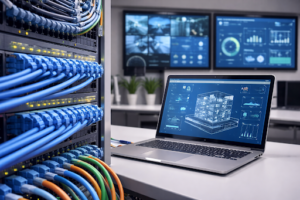
Modern buildings are becoming smarter every day. From offices to hospitals, hotels, shopping malls, and even homes now use automated systems to control lighting, air conditioning, security, and energy usage. All these smart systems need a strong and reliable foundation to work properly. This foundation is called structured cabling.
What Is Structured Cabling?
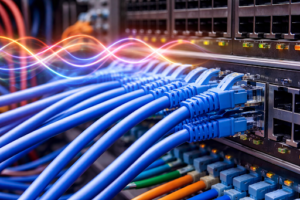
Structured cabling is an organized system of cables and hardware that supports different building services. Instead of using separate wiring for each system, structured cabling creates a single, well-planned network that connects everything together.
It allows data, voice, video, and control signals to travel smoothly across the building. Because it is properly arranged and labeled, it becomes easy to manage, upgrade, and maintain.
What Are Building Automation Systems?
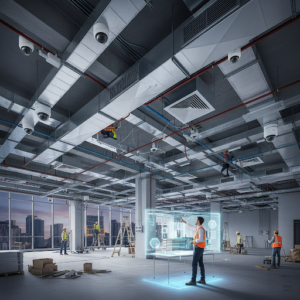
Building Automation Systems (aka BAS) are systems that automatically control building functions. These include lighting control, heating and cooling systems, fire alarms, access control, security cameras, and energy monitoring.
These systems work together to make buildings safer, comfortable, and energy efficient.
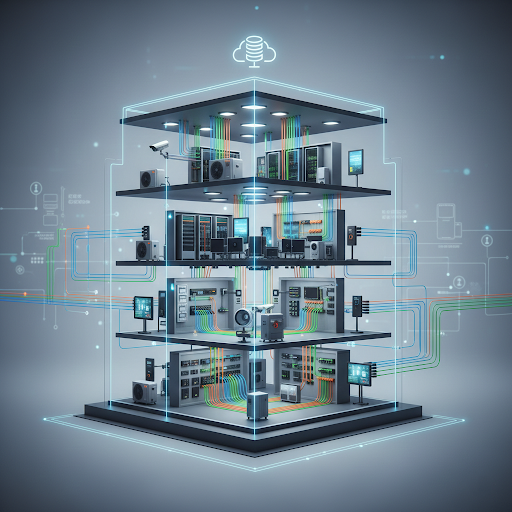
Why Structured Cabling Is Important for Automation
Here’s why structured cabling is important for automation.
- Reliable Communication Between Systems
Automation systems rely on fast and accurate data sharing. Structured cabling ensures that signals move without interruption between sensors, controllers, and devices. This helps systems respond quickly, such as turning lights on or adjusting temperature accordingly.
- Better System Performance
Poor or messy wiring may cause signal loss and delays. Structured cabling reduces interference and improves signal quality. It leads to smoother operation of automation systems and fewer technical issues.
- Easy Expansion and Upgrades
Buildings mostly need upgrades over time. Smart devices, new cameras, and sensors may be added later. Structured cabling makes all these changes easy because the network is already organized. You don’t need to worry about removing old cabling or installing new cables again and again.
- Improved Energy Efficiency
Automation systems help reduce energy waste by controlling lights, air conditioning, and power usage. Network cabling ensures that these systems work accurately. When data flows correctly, energy-saving actions happen on time, helping reduce electricity costs.
- Simplified Maintenance
Well-arranged and properly labelled cables are easy to arrange and fix. It not only reduces downtime but also avoids long-term disruption in building operations. It makes maintenance faster and less costly.
Supports Safety and Security Systems
Security systems such as CCTV cameras, access control, and fire alarms rely heavily on network cabling. A stable cabling system ensures that cameras stay connected, alarms work instantly, and access systems respond correctly during emergencies.
Long-Term Cost Savings
Although network cabling may seem like a higher investment at first, it saves money in the long run. Fewer breakdowns, lower maintenance costs, and easy upgrades reduce overall expenses. It also increases the building’s value and future readiness.
Therefore, it’s a suitable choice for office buildings, hospitals and clinics, hotels and apartments, shopping malls, and industrial facilities. Any building using automation systems benefits from a well-designed cabling setup.
Bottom Line
Structured cabling plays a crucial role in building automation systems. From connecting all smarter technologies to ensuring smooth communication, it supports reliable performance.
With proper cabling, automated buildings become more efficient, safer and easier to manage. As buildings continue to adopt smart technologies, structured cabling will remain an essential part of modern infrastructure.