Hotels today use smart energy systems to control lighting, air conditioning and power usage. From lowering costs to saving energy, these systems help hotels improve guests’ comfort. However, behind every successful hotel energy monitoring system, there is one key element working quietly in the background, i.e., a strong network infrastructure.
Without the right network setup, even the best energy management system cannot work properly.
Why Network Infrastructure Matters in Hotels
Hotel energy monitoring systems rely on constant data sharing. Sensors collect information about room occupancy, temperature, lighting use, and energy consumption. This data must travel smoothly through the hotel’s network to central systems.
If the network is weak or poorly designed, data may be delayed or lost. This can cause incorrect readings, system errors, or slow responses. A reliable network ensures that energy systems work accurately and in real time.
Key Components of a Reliable Hotel Network
A strong hotel network is built using several essential components.
- Structured cabling
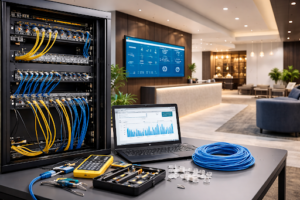
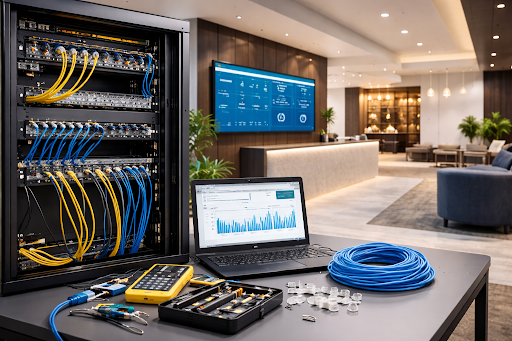
This is the backbone of the entire system. Well-organized cabling allows energy sensors, controllers, and management software to communicate without interruption. It also makes maintenance easier and reduces future upgrade costs.
- Low-voltage wiring
Energy monitoring systems use low-voltage connections to link sensors, meters, and automation devices. Proper installation helps prevent signal loss and interference, especially in large hotel buildings.
- Network switches and connectivity
Switches connect multiple devices across floors and rooms. High-quality network equipment ensures stable communication between energy systems and central control panels.

How Good Networking Improves Energy Monitoring
When the network infrastructure is planned correctly, hotels experience many benefits, including;
- Real-time energy tracking
Hotel staff can see live energy usage across rooms and common areas. This helps identify waste quickly and take action.
- Accurate automation
Lighting and HVAC systems respond correctly to occupancy data. Rooms automatically adjust when guests enter or leave, reducing unnecessary energy use.
- Fewer system failures
A stable network reduces downtime, data errors, and system crashes, which are common with poor cabling or outdated wiring.
Supporting Other Smart Hotel Systems
Energy monitoring does not work alone. It often connects with other hotel systems such as access control, building automation, and security. A strong network allows all these systems to work together smoothly.
For example, when a guest checks out, the network helps the system turn off lights and adjust air conditioning automatically. This integration improves efficiency and enhances the guest experience.
Planning for Future Hotel Technology
Hotels continue to adopt new technologies like smart sensors, analytics tools, and cloud-based dashboards. A future-ready network makes it easier to add new devices without major rewiring.
Proper cabling and network planning also help hotels scale their systems as they expand or renovate.
Key Takeaways
Reliable hotel energy monitoring depends on more than just smart software. It needs a solid network infrastructure to function correctly. Structured cabling, low-voltage wiring, and stable connectivity ensure accurate data, smooth automation, and long-term efficiency.
Hotels that invest in strong network foundations are better prepared to save energy, reduce costs, and support modern building systems, today and in the future.