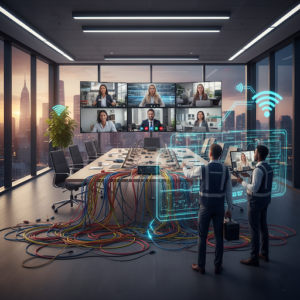

Multi-tenant commercial buildings, such as office towers, shopping plazas, and mixed-use complexes, depend heavily on low-voltage wiring. This type of wiring supports important systems including security cameras, internet networks, access control, fire alarms and communication systems. While low-voltage wiring is important, managing it in buildings with multiple tenants can be challenging.
What Is Low-Voltage Wiring?
Low-voltage wiring carries a small amount of electrical power. It is used for systems run on low electricity, including phone lines, data cables, CCTV systems and building automation. These systems help businesses operate safely and smoothly.
Why Multi-Tenant Buildings Face More Challenges
One of the key reasons why multi-tenant buildings face more challenges is that different companies or shops share the same infrastructure. Each tenant may have different technology needs, layouts, and service providers. This makes wiring management more complicated compared to single tenant building.
Common Low-Voltage Wiring Challenges
Highlighting some common low-voltage wiring challenges, including;
- Limited Cable Space
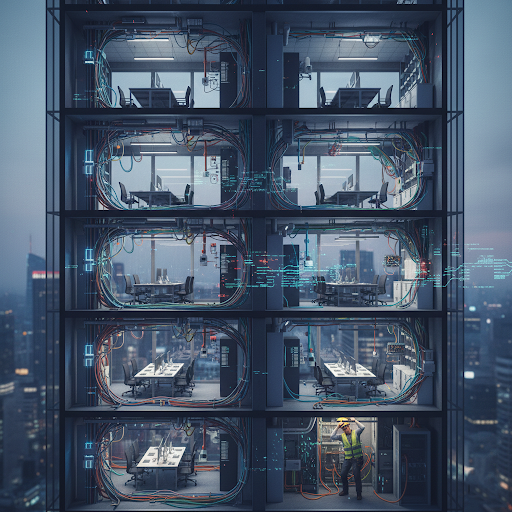
Multi-tenant commercial buildings mostly have limited space for running cables. When new tenants add more wiring, it may lead to cable trays and conduits. This not only makes installation difficult but also increases the risk of damage.
- Poor Cable Organization
Without proper planning, cables can become tangled and messy. Poor organization makes it challenging to identify which cables belong to which tenant. This can cause delays during repairs or upgrades.
- Interference and Signal Issues
Low-voltage cables are sensitive to interference from power cables and electrical equipment. In busy commercial buildings, poor cable separation can lead to weak signals, slow internet, and system failures.
- Difficult Maintenance and Troubleshooting
When cables are not organized or labelled properly, finding faults becomes time-consuming. Technicians may spend more time tracing multiple cables, which can disrupt services for several tenants at once.
- Frequent Tenant Changes
Tenants often move in and out of commercial buildings. Each change may require new wiring or system updates. Removing old cables and adding new ones can be costly and time-consuming if the wiring system is not flexible.
Safety and Compliance Issues
Low-volatge wiring must follow safety and building codes. In shared buildings, poorly installed or outdated wiring may rise safety concerns. Fire alarm and security systems must remain fully functional for all tenants, making proper wiring even more important.
How These Challenges Affect Tenants
Due to low-voltage wiring problem, tenants may face internet outages, communication problems, security system failures and business disruption. These issues reduce productivity and affect customer trust.
Ways to Reduce Low-Voltage Wiring Problems
Here’s how you can reduce low-voltage wiring problems.
- Structured Cabling Systems
Structured cabling keeps wires organized and labelled. Therefore, it becomes easier to manage multiple tenants without any confusion.
- Proper Planning and Design
Planning wiring routes before installation helps avoid overcrowding and interference. Future needs should also be considered.
- Regular Maintenance
Routine inspections help identify damaged or outdated cables early. This prevents bigger problems later.
- Professional Installation
Experienced installers follow safety standards and best practices, ensuring reliable performance for all tenants.
Bottom Line
Low-voltage wiring plays a crucial role in multi-tenant commercial buildings but it comes with several challenges. But it comes with several challenges. Limited space, poor organization, and frequent tenant changes can create problems if not managed properly.
With good planning, structured cabling, and professional installation, building owners can reduce these challenges and ensure smooth operations for all tenants.