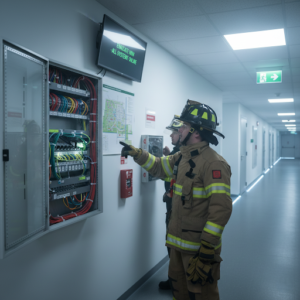
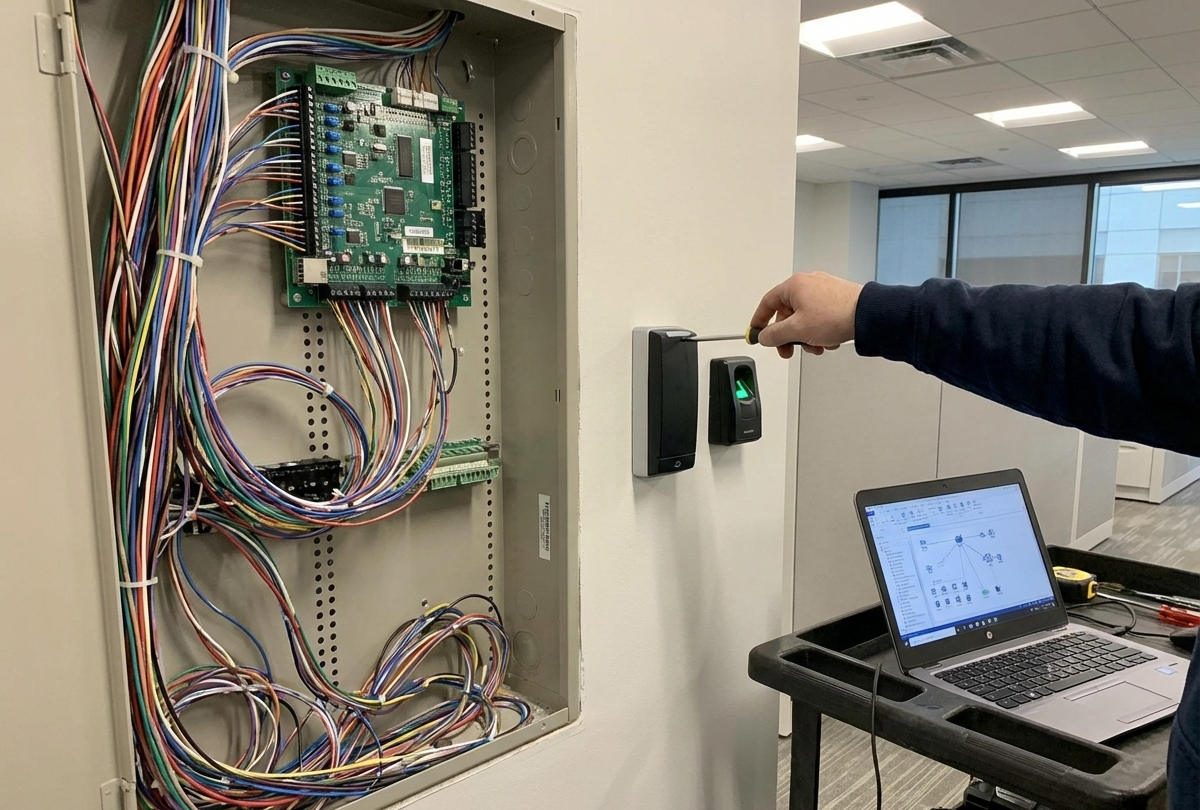
Modern buildings need strong security, but they also need systems that are strong, reliable and easily manageable. That’s where low-voltage infrastructure plays an important role, especially for access control and biometric security systems. These systems protect offices, schools, hospitals, commercial buildings and data centres without using high electrical power.
What Is Low-Voltage Infrastructure?
Low-voltage infrastructure refers to wiring and systems that operate on low electrical power, usually under 50 volts. Unlike traditional electrical wiring, low-voltage systems are safer, easier to install, require minimal maintenance and consume less energy.
Common examples include access control systems, biometric scanners, alarm systems, CCTV cameras, intercoms and sensors. These systems work together to create a safe and controlled environment.
Understanding Access Control Systems
Access control systems manage who can enter a building or a specific area. Instead of using traditional keys, these systems rely on electronic methods such as PIN codes, key cards, mobile apps and smart badges.
From door controllers to card readers, electric locks and central control panels. As the system runs on low power, it remains operational even during power fluctuations when paired with backup systems.
Role of Biometric Security Systems
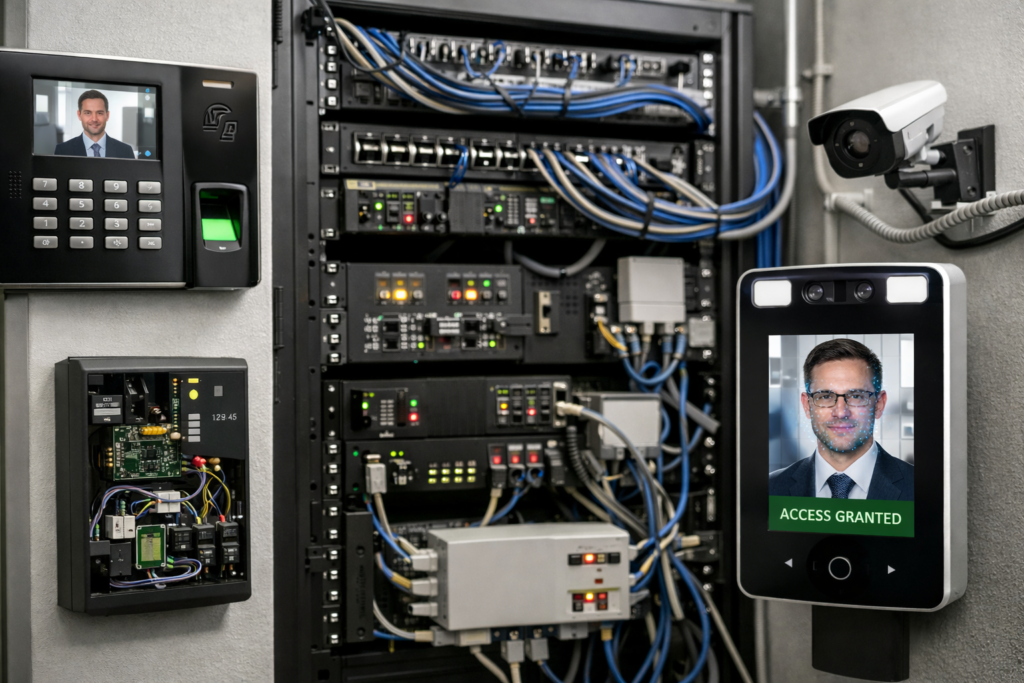
Biometric systems provide an additional layer of security by using unique human features to verify identity. These include facial recognition, fingerprint scanners, Iris scans and hand geometry readers.
Low-voltage cabling ensures smooth communication between biometric devices and the central security system. It improves performance and ensures fast identity verification while keeping energy use lower.
Why Low-Voltage Infrastructure Matters for Security
Nowadays, modern security systems can’t run smoothly without low-voltage infrastructure. It ensures that access control and biometric systems work reliably every day.
Highlighting some key benefits, including;
- Improved Safety
Low-voltage wiring reduces the risk of electrical shock and fire hazards, making it safer for people and property.
- Energy Efficiency
These systems consume very little power, helping buildings reduce energy costs while maintaining high security levels.
- Reliable Performance
Properly designed low-voltage networks provide stable connections, ensuring doors unlock on time, scanners respond quickly, and security logs are recorded accurately.
- Easy Integration
Low-voltage systems can easily integrate with CCTV surveillance, fire alarms, building management systems and visitor management software to create a unified security ecosystem.
Importance of Proper Cabling and Design
The performance of access control and biometric systems depends entirely on proper cabling design. Poor wiring may cause delayed door responses, system failures, false access denials and data communication errors.
Using structured low-voltage cabling ensures clean installation, better airflow, easier troubleshooting and future upgrades without significant disruptions.
Scalability for Growing Buildings
As organizations grow, they need to expand their security as well. Low-voltage infrastructure allows easy system expansion, including adding new biometric readers, installing access control on additional doors and connecting new floors or buildings.
This flexibility is highly beneficial for campuses, commercial offices, and multi-location facilities.
Maintenance and Long-Term Cost Savings
Low-voltage security systems are easier and cheaper to maintain than traditional systems. Components last longer, require fewer repairs and system upgrades can be done without replacing the entire network.
Over time, this results in lower maintenance costs, reduced downtime and better return on investment.
Bottom Line
Low-voltage infrastructure is essential for modern access control and biometric security systems. It provides a safe, energy-efficient and reliable foundation that supports advanced security technologies.
With proper planning and installation, low-voltage systems help buildings stay secure today while remaining ready for future security upgrades.
In a world where security and safety matter a lot, low-voltage security infrastructure is not just an option; it’s a smart investment.