Running a business with more than one location can be challenging. Whether it’s a restaurant brand, a retail chain, a franchise or an office network, all locations must stay connected. One of the key systems that makes all this possible is structured cabling. It creates a strong and organized network that supports daily operations and future growth.
What Is Structured Cabling?
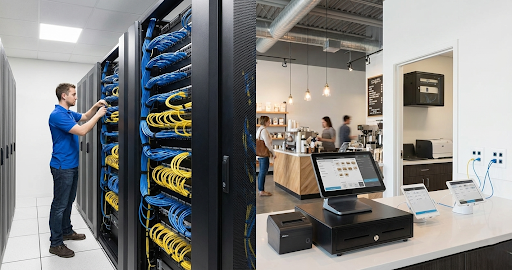
Structured cabling is a complete and planned network cabling system. From computers to phones, security cameras, servers, WIFI access points and digital devices, it connects everything through a single, organized structure.
Besides, it uses proper labelling, standards and layouts to avoid clutter and mess. This makes the network more reliable and easily manageable.
Why Multi-Location Businesses Need It?
Businesses with multiple locations rely heavily on fast and stable communication. Data needs to transform quickly between branches, headquarters and cloud systems.
Structured cabling creates a similar network setup at every location, which makes troubleshooting and fixing problems easier.
For franchises, consistency matters a lot. When every branch uses the same cabling design, IT teams can fix issues quickly, upgrade systems or add new devices without confusion.
Better Network Performance
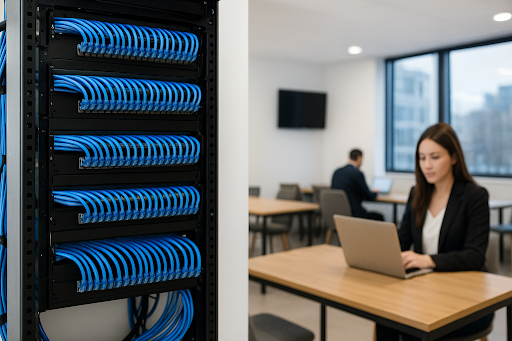
Structured cabling also improves overall network performance. It decreases interference, downtime and signal loss. This enhances overall internet speed, ensures clearer phone calls and guarantees smoother video meetings. Employees can work more efficiently, and customers enjoy a better experience.
The strong network is equally important for businesses that use cloud software, POS systems or online services. Structured cabling ensures these systems run without interruption.
Easy Expansion and Scalability
Multi-location businesses often grow. New branches open and existing locations add more devices. Structured cabling makes this expansion simple. Businesses can add new cables or equipment without disturbing the entire network.
This time-saving flexibility also saves you money in the long run. Businesses can expand their network without rewiring or upgrading technology.
Improved Security and Reliability
Security systems such as CCTV cameras, alarm systems and access control rely on stable wiring. Structured cabling supports these systems by providing reliable connections and better data protection.
It also reduces the risk of network failure. With well-organized and properly tested cables, the chances of losing connections and sudden breakdowns also decrease.
Lower Maintenance and Long-Term Cost Savings
Although cabling may cost more initially, it definitely saves money in the long run. Organized wiring reduces repair time and maintenance costs. The IT team can easily fix issues without worrying about tangled cables.
It also improves the lifespan of the network. High-quality and properly installed cables reduce the need for frequent replacements.
That’s how businesses can maintain consistent service quality across all branches.
Conclusion
Structured cabling is a smart investment for multi-location businesses or franchises. From better performance to strong connectivity, easy expansion and improved security, it manages everything.
Above all, it creates a stable foundation that supports business growth and digital transformation. For companies that want reliable operations across all locations, structured cabling is not just optional, it’s essential.