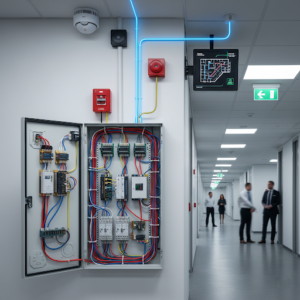

Fire safety and emergency response systems are essential for protecting lives and property. In modern buildings, these systems rely heavily on low-voltage wiring to operate reliably and efficiently.
From emergency lighting to communication systems and fire alarms, this wiring forms the backbone of today’s safety infrastructure.
What Is Low-Voltage Wiring?
Low-voltage wiring refers to electrical systems that operate at a lower voltage level, typically under 50 volts. Compared to high-voltage wiring, these systems are safe to install and maintain.
They are most commonly used for security systems, fire alarms, communication networks and emergency lighting. Their reliability and flexibility make them an ideal choice for commercial and institutional buildings.
Supporting Fire Alarm Systems
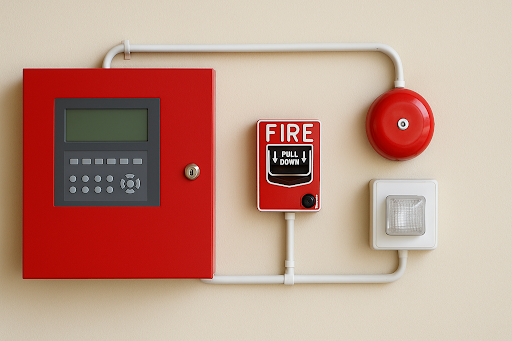
Fire alarm systems depend on this wiring to connect key components, including heat sensors, smoke detectors, control panels, alarm sounders, etc.
Low-voltage wiring ensures that signals are transmitted quickly and accurately, allowing the system to detect fire or smoke and alert occupants immediately. This fast response time is essential in preventing injuries and reducing damage.
Reliable Power for Emergency Systems
Power failures are common during emergencies. Low-voltage wiring supports backup power systems, including generators and batteries, ensuring devices function properly even after the main power supply is interrupted. This reliability carries great importance in evacuation situations, where every second matters.
Integration with Emergency Communication
Modern emergency systems go beyond simple alarms. They include public address systems, voice evacuation systems and emergency notifications. This wiring makes their integration smoother and ensures clear communication during emergencies. Clear instructions help prevent panic and guide occupants safely out of the building.
Enhancing Emergency Lighting Systems
Emergency lighting guides people to exits during fire or power outages. Low-voltage wiring connects emergency lights to backup power sources, ensuring visibility in corridors, stairwells and exit routes. Properly installed low voltage cabling is the key to ensuring these lights activate instantly when needed.
Safer and Easier Installation
One of the key benefits of low-voltage wiring is safety. As this wiring operates at lower electrical levels, it reduces the risk of electric shocks and fire hazards during installation and maintenance. That’s why low-voltage wiring is considered an ideal option for schools, hospitals, offices and public property where safety matters the most.
Scalability and Future Readiness
Buildings often upgrade or expand their safety systems over time. The flexibility and scalability of low-voltage wiring make it easier to add new detectors, alarm panels and communication devices without significant disruptions. This future-ready approach allows buildings to adapt to updated fire safety regulations and technological advancements.
Compliance with Safety Standards
Fire alarm and emergency systems must meet strict safety and building codes. Proper low-voltage cabling helps ensure compliance with local and international fire safety standards. Moreover, well-organized cabling also simplifies inspections, troubleshooting, and system maintenance.
Reducing Long-Term Costs
Although the initial installation can be costly, it requires proper planning. However, low-voltage wiring reduces long-term costs by minimizing system failures, downtime and maintenance issues. Reliable wiring also prevents false alarms and system malfunctions, leading to smoother operation and lower repair expenses.
Final Words
Low-voltage wiring plays a critical role in modern fire alarms and emergency systems. From fast response to reliable communication, backup power support, and safe evacuation during emergencies, it ensures everything goes smoothly.
Therefore, investing in well-designed low-voltage cabling helps building owners and facility managers create safer environments, protect lives and meet essential safety standards.
In today’s world, effective emergency response starts with a strong low-voltage infrastructure.