
Healthcare facilities rely on technology more than ever. From patient monitoring systems to nurse call buttons, imaging machines and electronic health records, everything depends on a strong and reliable network. However, one serious issue often goes unnoticed as hospitals and clinics expand, i.e., old cabling infrastructure.
Old cabling may be hidden behind walls and ceilings, but it can raise some serious concerns and create real risks for daily operations, patients’ safety and future growth.
Old Cabling Can Affect Patient Safety
In healthcare, even a few seconds of system failure can be problematic and threatening. Old or worn-out cables cannot completely support modern medical equipment, causing signal drops, slow data transfer or sudden system outages.
For instance;
- Patient monitors fail to send real-time data.
- Nurse call systems may not respond quickly.
- Security and access control systems may malfunction.
These aren’t minor issues as they can delay medical response times and put patients at risk, especially in critical care areas.
Growing Facilities Need More Data, Not Old Wires
As healthcare facilities grow, they add;
- More beds and wards
- Digital patients record
- Advanced diagnostic machines
- Remote consultations and telemedicine
Old cabling systems cannot perfectly handle today’s high data loads. They have limited speed and capacity required for modern networks. Resultantly, staff experience slow systems, dropped connections and frequent technical issues.
It not only impacts patient care negatively but also frustrates doctors, nurses and the administrative team.
Higher Maintenance and Downtime Costs
Old cabling leads to frequent breakdowns. IT teams spend more time fixing problems instead of improving systems. Emergency repairs are mostly disruptive and costly, especially in hospitals that operate 24/7.
Unplanned downtime can
- Delay treatments and procedures
- Interrupt lab testing and imaging
- Impact billing and record keeping
In healthcare, downtime is beyond a technical issue; it’s a service and safety issue.
Compliance and Security Risks
Healthcare facilities need to follow strict data protection and safety regulations. Old cables may create security gaps, making it easier for systems to fail or be compromised.
Poor-quality cables may
- Interfere with secure data transmission
- Affect access control and surveillance systems
- Increase the risk of data loss or breaches
With sensitive patient data at stake, outdated infrastructure can put facilities at risk of compliance violations and legal trouble.
Limited Support for New Technology
Healthcare technology is evolving fast. From smart beds to IoT medical devices, AI-based diagnostics and automated systems, everything requires reliable and high-performance networks.
Old cabling limits what a facility can adopt. Instead of upgrading smoothly, hospitals are forced into partial fixes that temporarily delay bigger problems. This slows innovation and negatively affects the quality of care.
Hard to Scale and Expand
When hospitals expand without upgrading cabling, networks become messy and unstable. Adding new systems becomes expensive and complicated.
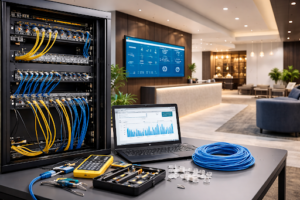
Modern structured cabling subtly supports easy expansion, better organization and long-term scalability.
In contrast, old cabling makes growth harder and riskier.
A Hidden Problem That Needs Attention
Because old cabling is primarily out of sight, it’s often ignored until something goes wrong. Sadly, when the failures become visible, the damage is already done.
However, regular audits and timely upgrades can improve system reliability, enhance patient safety, reduce long-term costs and support future technology.
Bottom Line
Old cabling is hidden, but poses a serious risk in growing healthcare facilities. It adversely affects safety, performance, growth and security.
Therefore, it’s essential to upgrade the cabling infrastructure as it’s a key healthcare priority.
By investing in modern cabling, healthcare facilities can ensure reliable systems, better patient care and a strong foundation for future care.