
Running a business comes with many responsibilities, and one of the most important is protecting your property, employees, and assets. Theft, vandalism, and unauthorized access can cause serious financial loss and operational problems. That’s why installing commercial security systems is getting popular among companies to improve safety and monitoring.
However, it’s essential to know that installing a security system requires proper planning. Business owners need to understand several important factors before choosing or installing a system. Making the right decision at the beginning is the key to avoiding security gaps, unnecessary costs and future upgrades.
Understand Your Security Needs First
Before installing any security equipment, business owners should first identify their security needs. Every business is different, and its security needs also vary. A retail store, office building, warehouse or restaurant will have different security concerns.
For instance, a retail store may need cameras to monitor customers and prevent shoplifting. Whereas a warehouse may need a strong access control system to protect valuable inventory. Offices may prioritize employee access and after-hours monitoring.
It is helpful to evaluate the property and identify areas that require protection, such as entrances and exits, parking areas, storage rooms, cash registers, server or equipment rooms.
Understanding these needs first helps in choosing the right type of security system that best meets your business needs.
Choose the Right Type of Security System
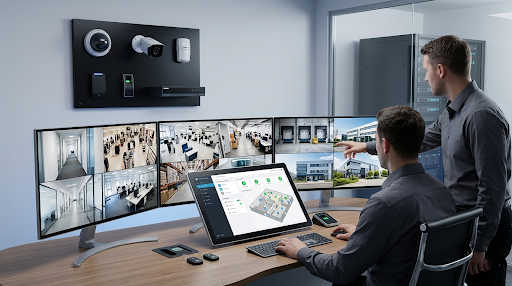
Commercial security systems usually include several components that work together to protect a building. Some of the most common features include surveillance cameras, alarm systems, motion sensors, and access control systems.
Security cameras help monitor activity inside and outside the building. Alarm systems can alert business owners or security companies if someone tries to break in. Motion sensors detect movement in restricted areas. Access control systems allow only authorized people to enter certain parts of the building.
Business owners should think about which features are necessary for their property. Installing too few security features may leave gaps in protection, while installing unnecessary equipment may increase costs.
Plan Camera Placement Carefully
Key placement is a major part of any security system. Cameras should be installed properly in the locations where they can easily monitor important areas without any hindrance.
Entrances, hallways, parking lots, and cash handling areas are common places where cameras are installed. Proper placement ensures that cameras capture clear images and useful video footage in the event of an incident.
Moreover, it is equally important to ensure that cameras are positioned at the right height and angle. Poorly placed cameras may miss important details or fail to cover major areas.
Consider Future Business Growth
When installing a security system, business owners should also think about future expansion. Many companies grow over time, and security needs may increase as the business becomes larger.
For example, a business might need to add new offices, expand warehouse space or hire more employees. A security system that can easily expand over time can save money in the future.
Choosing a system that supports additional cameras, sensors, or access points allows businesses to upgrade without having to replace the entire system later.
Make Sure the System Is Easy to Use
A security system should be easy for everyone (including employees and managers) to operate. Complicated systems not only confuse but also reduce effectiveness.
Modern commercial security system often includes mobile apps or cloud-based platforms that allow business owners to monitor cameras, receive alerts, and manage access remotely. This means managers can check their property from a smartphone or computer even when they are not on site. User-friendly systems make daily monitoring much easier.
Work With Professional Installers
Installing a commercial security system is beyond placing cameras or sensors. Proper wiring, configuration and testing are also needed. That’s why most businesses choose professional security system installers.
From evaluating the building to recommending the right equipment, only experienced technicians can install the system correctly. Professional installation ensures that all devices work properly and provide reliable protection. Lastly, professionals can help businesses comply with local safety and security regulations.
Regular Maintenance Is Important
After installation, security systems should be checked regularly to ensure everything is working properly. Cameras should be cleaned and tested frequently. Moreover, sensors should be inspected and software updates applied as needed.
One of the key benefits of regular maintenance is that it helps prevent technical problems and ensures the system continues to provide reliable protection.
Key Takeaway
Installing a commercial security system is a crucial step for protecting a business. However, proper planning is necessary before making any decision. Business owners should evaluate their security needs, choose the right equipment and ensure that the system can grow with their business.
By carefully planning camera placement, working with professional installers, and regularly maintaining the system, businesses can create a safer and more secure working environment. A well-designed security system not only protects property but also gives business owners peace of mind.